

By: Dr. Shlomo Widder, M.D., board certified plastic surgeon, American Board of Plastic Surgery
Medically reviewed: September 14, 2026
If you’ve started noticing changes in your face and heard both “Botox” and “filler” mentioned as the fix, you’re not alone in being unsure which one actually applies to you. They’re often talked about together, sometimes even used in the same appointment, but they work in completely different ways and address different things. Knowing the difference between Botox and dermal fillers before you walk into a consultation means you’ll ask better questions and understand the answers.
What Botox Actually Does
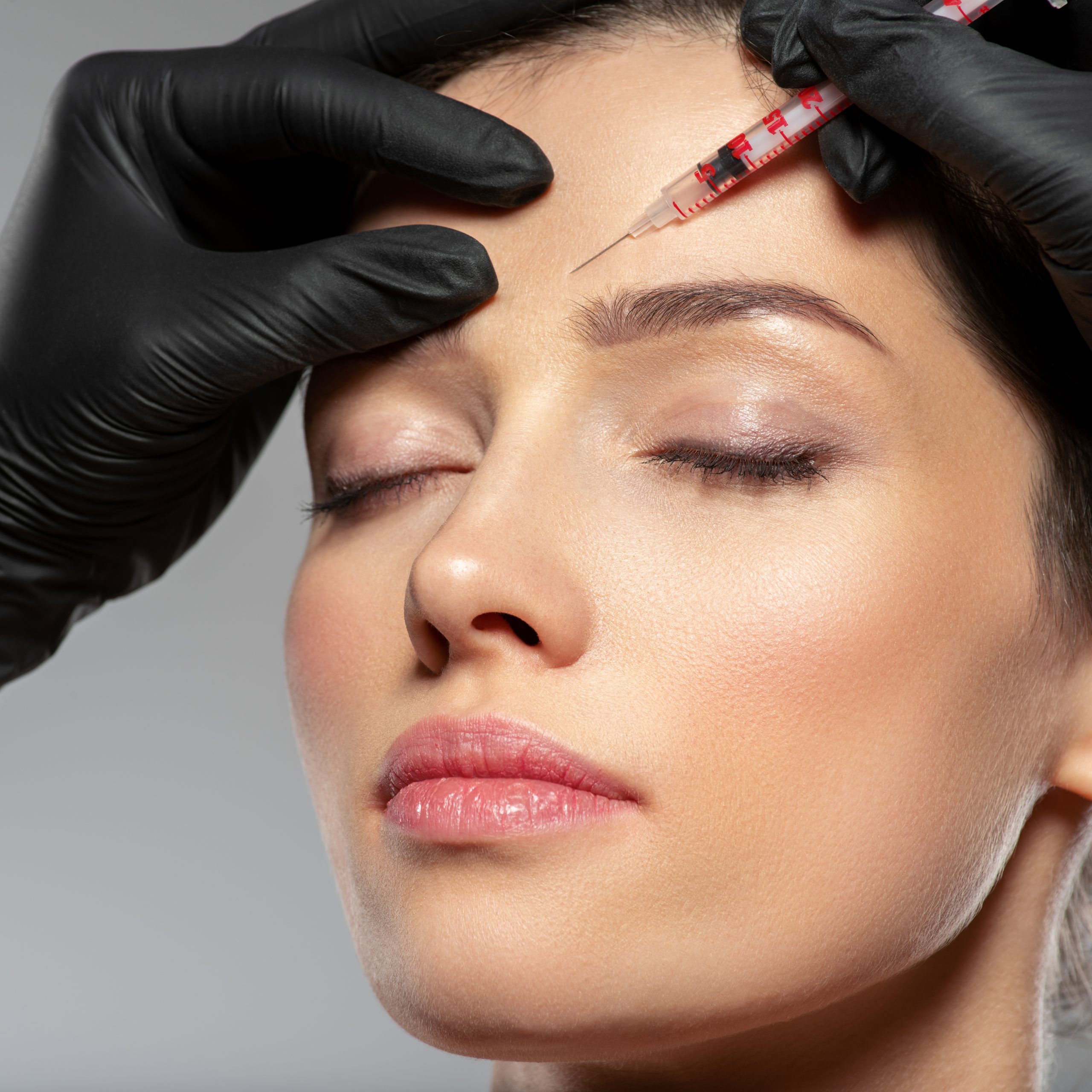
Botox is the most widely known brand name for a class of injectable medications called neuromodulators, which also includes other FDA-approved products. The active ingredient is onabotulinumtoxinA, and it works by temporarily reducing the activity of the small muscles under the skin that contract when you make certain expressions: squinting, frowning, raising your eyebrows.
Those repeated muscle contractions are what create what’s called a dynamic wrinkle, a line that shows up when you move but softens or disappears when your face is at rest. Common areas include the lines between the eyebrows, across the forehead, and at the outer corners of the eyes. By reducing how much those muscles contract, Botox reduces the wrinkle that the contraction was creating.
It does not add volume, and it does not treat lines that are present even when your face is completely still.
What Dermal Fillers Actually Do
Dermal fillers work on a different problem entirely: lost or shifted volume. Most fillers used in the face today are made from hyaluronic acid, a substance your body already produces naturally that holds water and gives tissue its fullness. As skin ages, natural hyaluronic acid and underlying fat volume both tend to decrease, which is part of why cheeks can look flatter, the area under the eyes can look hollow, and lines around the nose and mouth can become more visible even at rest.
Fillers are injected to restore some of that lost volume or to add structure and contour to areas like the cheeks or lips. Because they’re addressing volume and static lines, the ones present regardless of expression, rather than a wrinkle caused by muscle movement, they treat a different category of concern than Botox does.
The Core Distinction: Movement Lines vs. Volume Loss
If there’s one thing to take away from this article, it’s this: Botox addresses lines caused by muscle movement, and filler addresses volume that has been lost or was never quite where you wanted it. A line that only shows up when you make a specific expression is usually a Botox question. A hollow area, a flattened contour, or a line that’s visible even when your face is at rest is usually a filler question. Many people, especially over time, have some of both, which is exactly why a real consultation with an exam matters more than a self-diagnosis from a mirror.
Not sure which category your concern falls into? That is what an exam sorts out, so schedule a consultation and bring your questions.
Can Botox and Fillers Be Used Together?
Yes, and it’s common for a treatment plan to include both, addressing movement-related lines in one area and volume loss in another during the same visit or across a couple of visits. That doesn’t mean everyone needs both. Plenty of people only need one or the other, and a plan built around what your face is actually doing, rather than a package deal, is the more honest starting point.
Who Should Wait or Skip Injectables for Now
Injectables aren’t right for everyone at every point in time. You should hold off, and say so plainly at a consultation, if any of the following apply: you’re pregnant or breastfeeding, you have an active skin infection or breakout at the planned injection site, or you have a neuromuscular condition that a Botox-class product could interact with. Certain medications can also affect bruising risk or candidacy, so bringing a full medication list to your consultation matters more than people expect.
It’s also worth being honest about expectations. Neither Botox nor filler stops the aging process, and neither one is a substitute for a procedure like a facelift when the underlying concern is loose skin and tissue laxity rather than movement lines or lost volume. If that’s closer to what you’re seeing in the mirror, it’s worth asking directly whether a surgical option addresses it more effectively than an injectable would. Put simply, if loose skin or tissue laxity is the bigger concern, a facelift may address it more directly.
What a Consultation Actually Covers
A useful consultation starts with an exam, not a price list. Expect your provider to look at your face at rest and in motion, ask what specifically bothers you and where, and explain which of your concerns are movement-related, volume-related, or neither. That’s also the right time to ask what product would be used, how long results from that specific product tend to last, what the appointment itself involves, and what a quoted price includes. Costs for injectables can vary by treatment area, the amount of product used, and the provider, so ask directly rather than assuming a number.
Getting Botox and Dermal Fillers in the Tysons Corner Area
For patients across Vienna, Tysons Corner, McLean, and the broader Leesburg Pike corridor, injectable consultations happen at the same Vienna office where Dr. Widder performs surgical consultations, not a separate med-spa storefront. That matters for a simple reason: if an exam turns up something that a filler or neuromodulator won’t meaningfully address, such as skin laxity that calls for a surgical conversation instead, that conversation can happen with the same person in the same visit rather than being handed off elsewhere.
The office sits on Leesburg Pike, accessible from the Dulles Toll Road and Silver Line corridor, which is a convenient stop for patients coming from McLean, Great Falls, Falls Church, or Fairfax on their way to or from Tysons. Because injectable appointments are typically shorter than surgical visits, many patients schedule them around a workday rather than needing to block off significant time.
Your Next Step
Whether your concern is movement, volume, or some of both is a question an exam answers faster than a mirror. Schedule a consultation to talk through your goals, read more about Botox and dermal fillers at our Vienna office, or see examples in our photo gallery. You can also call (703) 506-0300 to reach the Vienna office.
Individual results may vary. Photos show real patients of Dr. Widder and are provided for illustrative purposes only. These images do not guarantee or represent a typical outcome for any specific patient.
Frequently Asked Questions
What is the actual difference between Botox and dermal fillers?
Botox is a neuromodulator that temporarily reduces muscle activity, softening lines caused by expression. Dermal fillers, usually made from hyaluronic acid, add volume to areas that have lost it or were never as full as you’d like. They treat different problems and are often used in different areas of the face.
Can I get Botox and filler on the same day?
Many providers can perform both in one visit if an exam shows you have both movement-related lines and volume loss. Whether that’s right for you depends on your specific goals and anatomy, which is a consultation question rather than a default plan.
How long do Botox and filler results typically last?
Duration varies by product, treatment area, and the individual, and your provider can walk through what to expect for the specific product being discussed. Neither is a one-time, permanent treatment; both require maintenance over time to sustain the effect.
Is Botox or filler safer?
Both are FDA-approved categories of products with established safety profiles when administered by a qualified provider following labeled use. Safety also depends heavily on who is injecting, your individual health history, and proper technique, which is why the provider’s training matters as much as the product itself.
Who shouldn’t get Botox or dermal fillers?
People who are pregnant or breastfeeding, have an active infection at the injection site, or have certain neuromuscular conditions should wait or avoid these treatments, and should say so clearly during a consultation. Your provider will also ask about medications and prior reactions before treating you.